What is renderlint?
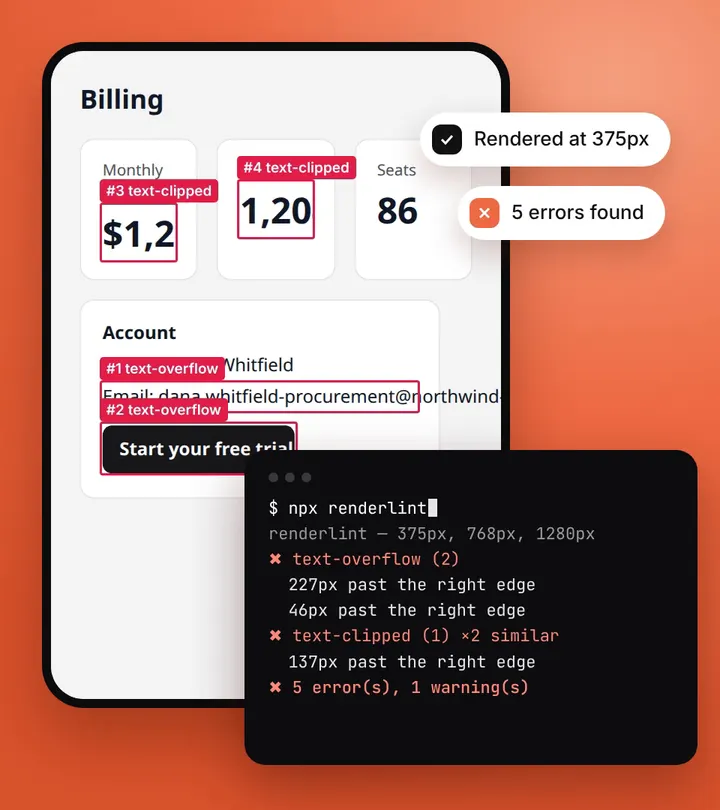
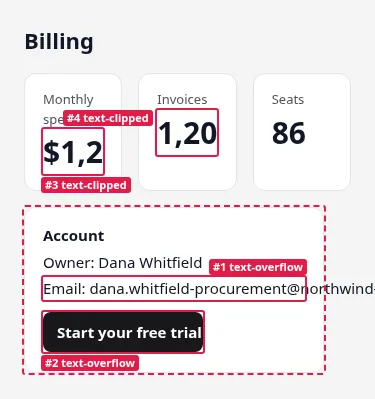
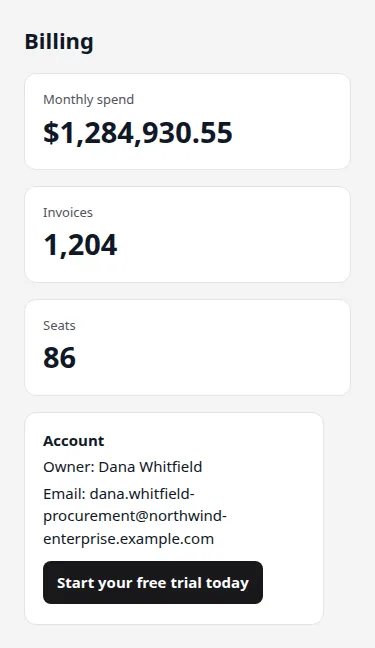
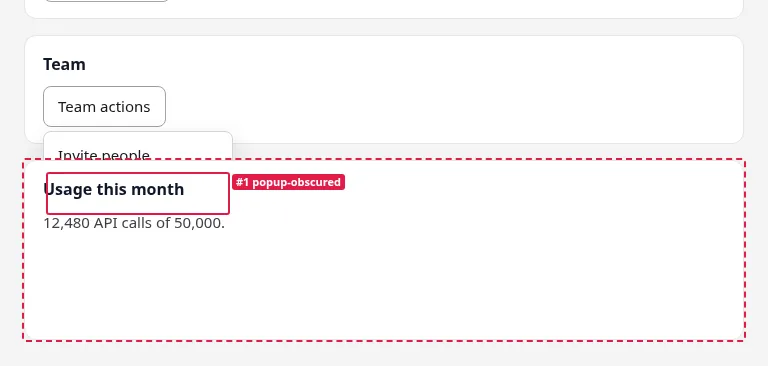
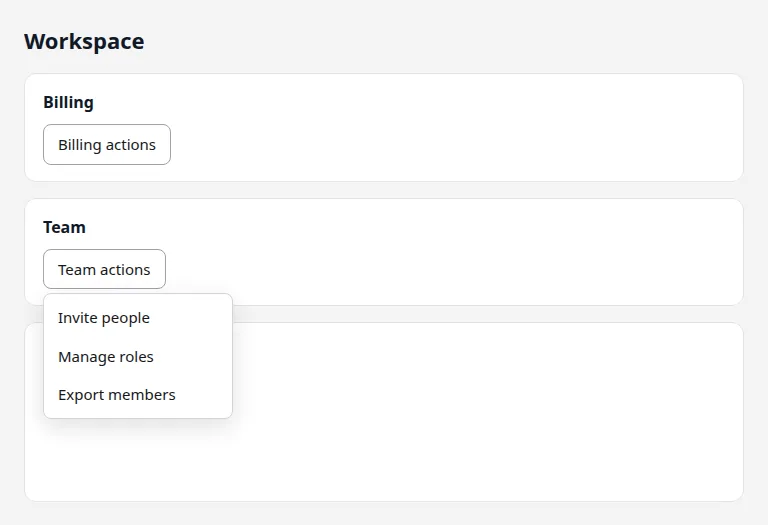
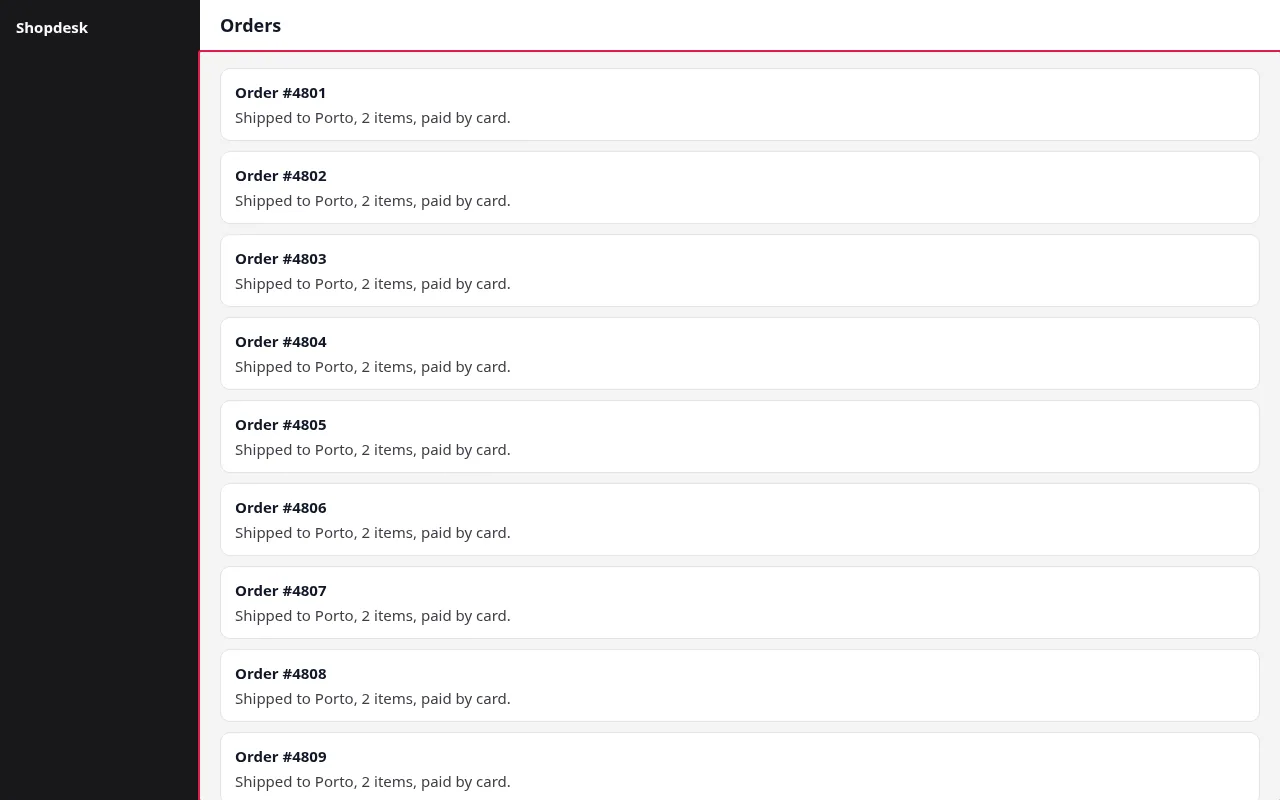
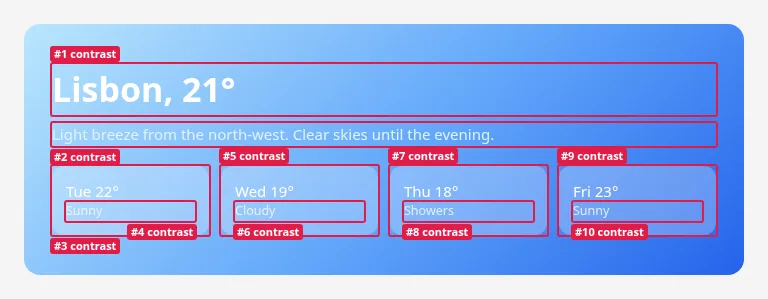
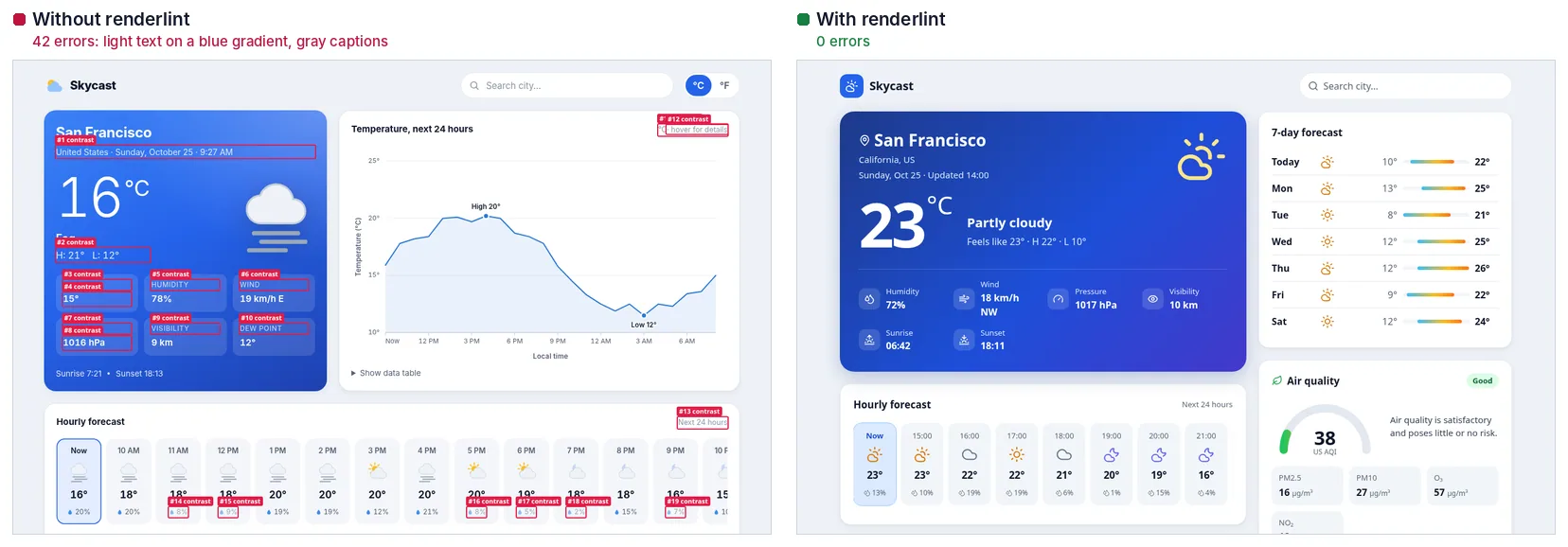
renderlint is an open-source (MIT) linter for the rendered UI. It opens a web app in headless Chromium at phone, tablet and desktop widths, finds visual defects such as text overflowing its box, low contrast, overlapping elements, unreachable content and menus that can’t be seen, and exits with code 1 until they are fixed. Each finding names the element, the source file, an annotated screenshot and a fix.
How is it different from ESLint, axe or Lighthouse?
ESLint, stylelint and TypeScript read source code, so they can’t see that text spills out of a card. axe-core and Lighthouse read the DOM and computed CSS, so they don’t catch overflow, overlap or clipping, and they report contrast over gradients and images as “needs review”. renderlint measures the rendered geometry and the real pixels behind each glyph.
Is it a visual regression testing tool?
No. Visual regression tools (Percy, Chromatic, BackstopJS, Playwright screenshots) compare pixels against approved images, so a defect in the first version becomes the baseline, and they show what changed rather than what is wrong. renderlint needs no baseline: it judges each page on its own. Use visual regression for unintended changes to an approved design, and renderlint for defects in pages nobody has approved yet.
Which frameworks does it support?
Anything that renders in a browser: React, Next.js, Vue, Nuxt, Svelte and SvelteKit, Astro, Angular, Solid, Qwik, Remix, WordPress and plain HTML. It reads routes from the source of Next.js, Nuxt, SvelteKit, Astro, React Router / Remix, TanStack Router, Angular and Vue Router apps.
Can it check pages behind a login?
Yes. Give it the token your route guard reads and mock the API, log in once through your real form, or run a script for SSO. With roles, every page is checked as each role. A page that only showed the login form or “Access denied” is reported as auth-required or page-not-shown, never passed.
How do I use it with Claude Code and other coding agents?
Run npx -y @yitec/renderlint init. It adds a Claude Code Stop hook, so Claude can’t end its turn while UI errors remain in files it changed (it gives up after 4 attempts), writes the workflow into AGENTS.md for Codex, Cursor, Copilot, Gemini CLI and others, and installs three skills for setup, fixing and Playwright/Storybook.
How long does a check take?
A single page takes about 4 to 10 seconds at three viewports with the sweep and stress passes. Pages are checked side by side, and pages that render identically share their checks. Use --sweep 1024 or --no-sweep for a faster inner loop.
What can’t it check?
Labels inside <canvas> charts are pixels, so they can’t be inspected. What sits behind clicks (dialogs, tabs, filled forms) is only linted when you list it in states or reach it in a Playwright test. Contrast follows the WCAG 2 AA formula, not APCA. Server mocks are Node only.